Sunday, December 11, 2005

Halogen Light Placement

about the nature and Disneyland


Few people can be happy without hate some other person, nation or creed.
-Lord Bertrand Russell

After Kyoto, for my birthday, I went to Disneyland.
To reach this huge park is taken from Tokyo, a special train: it is easily recognized as the windows are in the shape of Mickey Mouse ears, and inside and 'all decorated in a Disney style. The park is about an hour from home and Kanako and 'at the airport near Narita.
The entire complex has its own hotels, restaurants and places where you can even get married: I have seen all the parade with his wife in an Italian-style houses waving from a balcony.
In fact this year I visited DisneySea and that 'next to Disneyland because this huge amusement park and' split in two. The the first part that I did last year is the classic Disneyland can be seen in Paris or in America consists of more or less rides based on characters from the Disney. The second part I saw just this year consists of four different landscapes: the first is a gulf Italian (with a lot of Italian restaurants), equal to Portofino, which is also located within the area that recreates Venice (the gondola ride) and even the Duomo of Florence (only as a background), the second part is a volcanic island and there are games based on Verne (ten thousand leagues under the sea, the adventure center of the earth), the third party in style ancient persia el ' Last devoted to the Aztecs. Everything is taken care
to the smallest detail is the exterior and the rides. The latter are all very nice and even if they reach the peak of a heart attack in Wonderland (they are all quiet like "sit and watch") refer nicely more than once (we were lucky, there were few people and not There were queues).
Every two hours there are some really great shows (some fireworks all based on the elements water, fire, earth, air. For example, from the Gulf in the Italian style came a mechanical dragon everything that was burning off by a huge fountain which looked like women. Other theater very well done) to see that only one worth buying the ticket (40 €).
At ten in the evening leave the fireworks that last for about fifteen minutes.
Even the weather has given us a fantastic sunny cloudless for which it was a memorable day (and then added the Christmas theme with Christmas trees and music of this genre have made it even better).
How much money do in this park do not know why to pay the hundreds of people who work there, architects, engineers and all the shows must go away a lot of money, it is also true that every day thousands of people from all over Japan are here, eat, buy souvenirs and residing in hotels.
The way I see the entry price is low compared to the costs that addresses this amusement park.
Some people do not like these places in the arguments that we should entertain for strength. It is not true. There are many sets of conditions for which a day spent in amusement parks is a good day. Meanwhile, the company: that is hard to go alone, but you will always be a group of friends (or boyfriends) that you already start with the idea of \u200b\u200bhaving fun. Secondly, the atmosphere of these places is always pleasant, both for small parks such as the Italians who more so in this huge. Third, the rides, not necessarily all wish for fun roller coaster or something, but there are many types of these parks and the most suitable location forever. If the opportunity arose
have fun without thinking about whether we should necessarily fun or not.

**


I saw up close the buildings in Shinjuku. In one of these, which cost one billion dollars, there is' the seat of Japanese government. Ripert, but I would not like other "neighborhoods" that is also completely "hollow": dozens of subway lines run underground and generally hundreds of shops and restaurants. You can walk for an hour underground and always visiting new places.
This "neighborhood" 250 000 people work in the morning so underground lines are so crowded that at every door is the type involved in pushing people on the train (every day at this station are moving two million people).
The buildings will be about ten: they have high design for the Yokohama or Roppongi but they are all but they are all impressive.

**


I will never believe that God plays dice with the world.
-Albert Einstein

I was back to Kamakura, a town near Tokyo. Armed with a camera I did it again tour the temples and the Great Buddha. Clear day, perfect weather.
Worthy of note, I managed to watch the first sunset since I came here, we are get off the train at five o'clock in the afternoon in a village on the sea (sea is simplistic as it is an ocean) when the sun dips into the waters red now. Aiming at the horizon from the beach, close to the sun, you can see Mount Fuji from the top sprout, timid, white clouds.
Slowly the blue sky gives way to suffused with red / orange sunset, a flash in the sun is swallowed by the ocean and the sky is getting darker.
admire this show of nature makes me think why I consider so beautiful. Why nature arouses feelings so sublime? No human construction can only rely on the beauty of a sunset framing the mountain Fuji (which is only an option). Perhaps those who have the sensibility to appreciate these shows is not so different from Voltaire, by Albert Einstein, by Giordano Bruno who, with different words but with the same spirit extolled the beauty of nature and the laws that govern it.

Saturday, December 3, 2005

Wards Ap Biology Lab Activity #8

Kyoto


Life is short, art wide, the occasion instant, experience misleading, the assessment difficult.
-Hippocrates

If you want to get an idea of \u200b\u200bhow you take Kyoto Roma: wipe off from top to bottom, all traces of immigrants eliminatene / ugly faces / rabble in general, add a little ' and change the nature of Christian churches with Hindu temples / Buddhists. The glories of the old shogunate
can be seen here as the decaying structures of the Roman Empire in Rome: Everywhere you see temples, Zen gardens and statues of some strange deity.
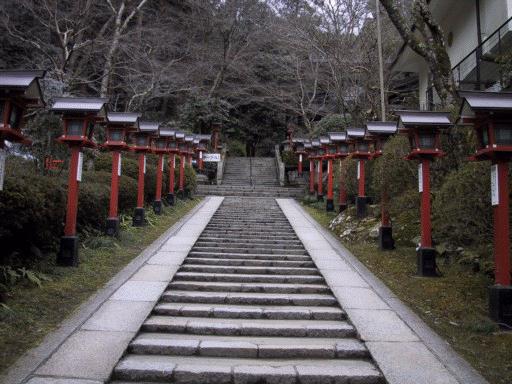
not remember the name of all the temples I have visited it are all alike: a beautiful landscaped garden in every detail, ponds of water and gravel, and finally the temple (the pagoda) of wood inside which sits a Buddha or a painted some God, all things flavored with various symbols and metaphors for life.
Let's go! At 9:00
take the bus from Tokyo (it's a guided tour) and after about an hour to our right emerges among low clouds l’imponente vulcano Fujihama: è affascinante soprattutto perché non ha colline o montagne nelle sue vicinanze quindi sembra ancora più grande. La sua cima innevata è a forma di cono e pare che debba eruttare lava da un momento all’altro. Per i giapponesi è ancora più impressionante considerando che in Giappone non esiste una montagna più alta, ma per chi ha visto le Alpi non è poi così eccezionale: andante a Saint Moritz e salite lungo la funivia per raggiungere la vetta di una delle tante montagne. Una volta in cima ammirate il paesaggio che vi si presenta a 360° gradi. Varrà ben più di cento Fuji. La bellezza del Fuji non sta tanto nella montagna in se quanto ai suoi caratteri che ricordano molto la cultura Japanese is difficult for a European carp: is a solitary mountain whose imposing figure can be seen from many places tens of kilometers away, is a mountain inside which resides a powerful fire that destroys everything with a terrifying force in the case decides to erupt, it is a mountain with no trees or vegetation. The Japanese love these characters: solitary meditation, a great inner strength, a luxury made of a spartan space (the more expensive Japanese restaurants do not have ornaments in them and everything is reduced to essentials such as old-style Japanese houses or temples) . You can understand then why Mount Fuji is so revered in Japan.
Pass another two hours we arrive in a village surrounded by nature: we are moving towards the top of a hill covered with trees. Nature is very beautiful especially in this season the trees have very bright colors: red, like fire or yellow like the sun. The contrast of these colors with the blue sky make the environment even more attractive.
Atop the hill is the temple, in painstaking detail, and very similar to all other temples that I'll see later.
the evening due to a queue on the motorway we spend four hours on the bus through the streets toward the provincial and 23:00 we finally arrive at the hotel in Osaka: an industrial city quite as bad is poorer in Tokyo (no big cars or skyscrapers Ultratech) but is even more full of huge mansions and buildings that seem to sprout from the ground without apparent order. Consider that I've only seen from the road and my opinion may be influenced by the fact that I had spent 15 hours on the bus.
The hotel is in Western style, nothing special. We are looking for a restaurant nearby and we find one that offers Korean cuisine: not bad.
The next morning we go to another town near Kyoto: Remember those rural villages that are seen in Sampei, with the river that passes through and the trees that surround the houses.
We have four hours to spend here and visit a very nice house built on a hillside overlooking the valley of Kyoto. A kind of Japanese Fiesole. This house, which belonged to an actor who died recently, is obviously very appealing, but it is even more around the park. Beautiful to look but not live there because I could not stay in a place where everything is precise, well-kept, even the stones have their own logic to stay where they are.
lunch in a restaurant kitchen and I eat Japanese tempura, which is two ebi (shrimp) and other fried vegetables.
Finally in the afternoon we go to Kyoto, the ancient capital of Japan. Here, fortunately, is forbidden to build houses and then apartment blocks have remained in their old style, each house from the roof and arched dark is a small house surrounded by a small garden.
abandon the tour and continue on their own. Peniamo a bit 'in the search of the hotel and we find it only with the help of the taxi. The hotel is totally in old Japanese style, he even kept garden all around and a nice river that flows nearby, full of herons and other birds like the beak and long legs.
Once we take off our shoes at the entrance and the change with a pair of slippers that provide us with the waiter. The room is huge room with a small table (very low) in the center (you have to be to sit cross-legged, there are no chairs) and a small ledge where you can enjoy the view of the river and the garden. There are no beds, they are in the wardrobe: the mattresses (futon) that will be placed on the ground (on the mat, that is the floor, which is not hard but slightly soft) in the hour in which you want to sleep. Before I go into what Onsen (hot spring) the hotel and relax a bit. These baths, divided by sex, are the public pools where people are immersed in water to more than forty degrees. Before entering these tanks there are showers where you can wash with soap, shampoo etc, but no standing because they are not divided and / or away from the tanks so you have to sit to avoid splashing the people: it is deliberately on purpose because here is as it was in ancient times, when there were no showers it was poured hot water outlet from the bowl using a wooden spoon. Everything is done by following a particular ritual, even for bathing.
Then we go to dinner, raw fish, cooked, fried shrimp and other vegetables. Routine.
pajamas and a kimono that provides us with the hotel: I seem to have the skirt and you have to be to sit in an uncomfortable position. But you know, you have to adapt to take full advantage of these cultures so alien.
The next day we visited several temples: one national treasure, is the tallest wooden building in the world. Even in ancient times to the Japanese liked build palaces.
Another 1033 are inside statues as large as a man of the Hindu goddess Vishnu (or Kali boh) that with many hands. Each statue has a different face and there is' a belief that says that at least one of the statues has your face. The children are hours watching the statues in hopes of finding one that resembles them. An elderly Japanese who was absorbed in the contemplation of the sacred Buddha (buddha call them, even though they are Hindu deities), I note with great admiration, and tells me that these statues are there from the foundation of the temple, that is eight hundred years before. The answer must be that if you are really tired from standing so long. Maybe he does not understand the joke that hides Zen meaning, but asks me where I came from and heard the reply tells me that would be both in Italy, but it's too old. The answer is that you're never too old for anything, and unfortunately I have to go. Apparently she wanted to say more, but thinks better of it and I greet and thank.
In another area, once it was built a wooden bridge connecting the two temples, but the beauty of this bridge is that it is suspended over a multitude of trees, red, orange and yellow and creates a very suggestive.
the morning of the fourth day we visited two other temples, one called Silver (but did not track) and another gold (in fact it is completely covered with gold leaf and the sun, glare). The temple itself has nothing special: they are small buildings of three floors with many mirrored arched roofs, but the gardens are manicured and as always worth the visit.
In the afternoon we book train tickets (the famous Shinkansen) and go to the station means a building ultra modern and huge: 430 meters long and inside the top one hundred is the most impressive I've seen, not because of the height or length, as to the form in general that makes it seem even bigger, in fact it does not have a roof (it only has the wavy glass windows similar to the rainbow), so it seems infinitely more spacious. Going up the endless escalators can be reached the top where you can enjoy the view of Kyoto and there 's even a garden with trees and a Helypad. Obviously there are many underground floors full of shops and restaurants. The card works as in the subway (and airport) to enter the area where trains must be entered in the special machines that stamp and you I'll open the gates.
The Shinkansen, of course, in time, has a wavy shape that resembles a submarine, but much longer. E 'is an all-white exterior and the interior is fitted with LCD screens that show the bus stops, railway stations, the miles that are missing and in general all the information that can be used. It 's a superfast train that bend bends like the bikes, took two hours to return to Tokyo.
Visit Kyoto is mandatory for those who come to Japan and is a journey and an experience that I recommend to everyone.


PS: Thanks to the parents of Kanako that over to join us in this adventure, they paid out of their pockets the Japanese hotel, restaurants and travel. I have paid only the first two days of organized trip to a value of about 250 €.